

Black Friday is the one weekend of the year when sales volume can spike 3-5x and it’s also the weekend most ecommerce sellers quietly lose the most money per order. The discount looks great on a banner. The margin math behind it often doesn’t get checked until January.
This isn’t an argument against discounting. It’s a guide to discounting on purpose, with your numbers in front of you instead of a round number that felt right.
Why Black Friday Discounts Are Riskier Than They Look
A 20% off sale doesn’t cost you 20% of your margin it can cost far more. If a product normally carries a 35% profit margin, a straight 20% price cut can drop that margin into single digits once shipping, payment processing fees, and ad spend are factored back in. The discount comes off the top line; your fixed costs don’t move.
Add in Black Friday-specific cost spikes higher ad costs from platform-wide bidding wars, holiday carrier surcharges, and higher return rates in the weeks after and a discount that looked safe in October can be break-even or worse by the time the order actually ships.
Know Your Break-Even Price Before You Set a Discount
Before choosing a discount percentage, calculate your break-even price for the promotion period not your everyday break-even, since BF-specific costs are usually higher.
Break-even price = Cost of goods + shipping + payment fees + estimated ad cost per order
If that number is $18 and your normal price is $30, you have $12 of room to discount from not $30. Framing the discount against break-even, rather than against list price, is the single biggest fix for BF pricing mistakes.
Markup vs. Margin: The Mistake That Wrecks BF Pricing
This is where a lot of sellers lose money without realizing it. A “20% off” discount is taken off your selling price — but sellers often mentally check it against markup, which is calculated differently.
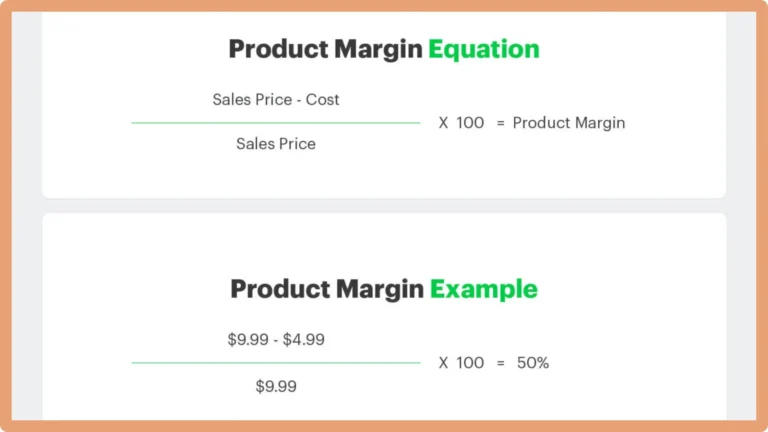
- A $50 cost, $70 sale product has a 40% markup but only a 28.6% margin
- Take 20% off the $70 price → new price is $56
- New margin: ($56 − $50) ÷ $56 = 10.7% — down from 28.6%
The seller thought they were giving up “20% of margin.” They actually gave up more than half of it. Always run the discounted price back through a margin calculator before publishing it don’t estimate the post-discount margin, calculate it.
How Much Can You Actually Afford to Discount?
A practical way to set the ceiling:
- Calculate your current margin at full price.
- Decide the minimum margin you’re willing to accept on a BF order (many sellers use half their normal margin as a floor).
- Work backward to find the maximum discount that still clears that floor.
- Round down, not up — leave a small buffer for returns and unexpected ad cost increases.
This turns “let’s do 25% off because everyone else is” into a number backed by your actual cost structure.
The Hidden Costs That Eat Into BF Margin
These are the line items that get missed most often when a discount is set weeks in advance:
- Ad cost inflation — CPCs and CPMs across most platforms rise 20-40% during peak BF/Cyber Monday bidding, so your usual customer acquisition cost assumption is outdated by the time the sale runs
- Carrier surcharges — peak-season shipping surcharges apply on top of your normal rates
- Higher return rates — impulse and gift purchases historically return at a higher rate than regular-season orders
- Payment processing on refunds — most processors don’t refund their fee when you refund the customer, so returns cost you twice
None of these show up if you only check margin at the moment of sale they show up on the P&L weeks later, which is exactly why they get missed.
Smarter Alternatives to a Straight Percentage-Off Sale
A blanket “25% off everything” treats every SKU as if it has the same margin, which it doesn’t. A few alternatives protect margin better:
- Tiered discounts by margin band — deeper discounts on high-margin SKUs, smaller ones on thin-margin products
- Spend-threshold discounts (“$15 off orders over $75”) — protects margin on small orders while still moving volume
- Bundling — pairing a high-margin add-on with a lower-margin hero product often protects blended margin better than discounting the hero product directly
- Free shipping instead of % off — if your shipping cost is lower than the equivalent discount value, this can move the same customer decision at a lower true cost
A Simple Pre-Black-Friday Margin Checklist
- [ ] Calculate break-even price per SKU, including estimated BF ad cost
- [ ] Recalculate margin after the planned discount — not before it
- [ ] Set a margin floor and work the discount backward from it
- [ ] Factor in peak-season shipping surcharges
- [ ] Build in a return-rate buffer for the promotional period
- [ ] Run the numbers per SKU, not as a store-wide average
Running each SKU through a profit margin calculator with your real BF costs not your everyday costs takes a few minutes and is the difference between a sale that grows the business and one that just moves inventory at a loss.
FAQs
How much can I discount for Black Friday without losing money?
It depends on your current margin, not a fixed percentage. Calculate your break-even price including BF-specific costs (higher ad spend, peak shipping surcharges), then set your discount ceiling against that number rather than against your normal margin.
Does a 20% off sale mean I lose 20% of my profit margin?
No — usually more. A percentage discount is taken off selling price, while margin is also calculated against selling price, so the margin percentage drops faster than the discount percentage. A product with healthy markup can see its margin cut by half or more from a 20% price cut.
Should every product in my store have the same Black Friday discount?
Not if you want to protect overall margin. Products carry different margins, so a single store-wide discount percentage disproportionately hurts your thinner-margin SKUs. Tiering discounts by margin band keeps blended profitability higher.
How do returns affect Black Friday profit margins?
Higher-than-normal return rates during and after BF reduce realized margin below what the sale-day numbers suggest, and most payment processors don’t refund their transaction fee on a return — so each returned order costs slightly more than the original margin math assumed.
Is free shipping a better Black Friday offer than a percentage discount?
Sometimes — if your actual shipping cost is lower than the equivalent dollar value of a percentage discount, offering free shipping can drive the same purchase decision at a lower true cost to your margin. It’s worth calculating both options against your real numbers rather than defaulting to whichever competitors are running.