
If you’re running a dropshipping store, revenue alone doesn’t mean much. What matters is how much money you keep after everything is paid for.
Many dropshippers think they’re profitable—until ad costs rise, refunds increase, or a supplier changes pricing. That’s usually when they realize they never calculated their profit margins properly.
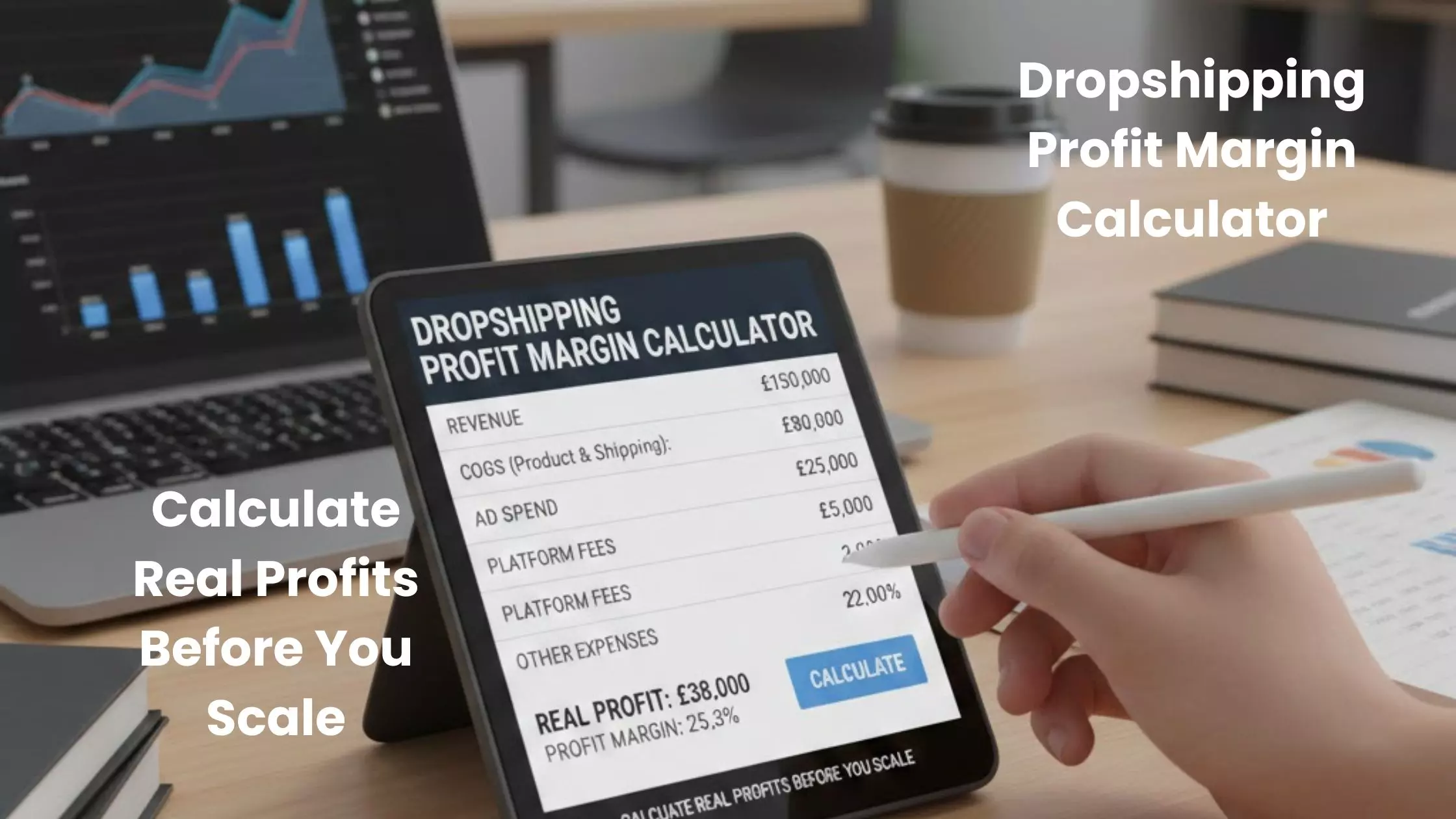
A dropshipping profit margin calculator helps you avoid that mistake. It shows you your real numbers before you spend more money or scale ads.
Let’s break it down properly.
What Is a Dropshipping Profit Margin?
Your profit margin is the percentage of revenue left after subtracting all costs related to a sale.
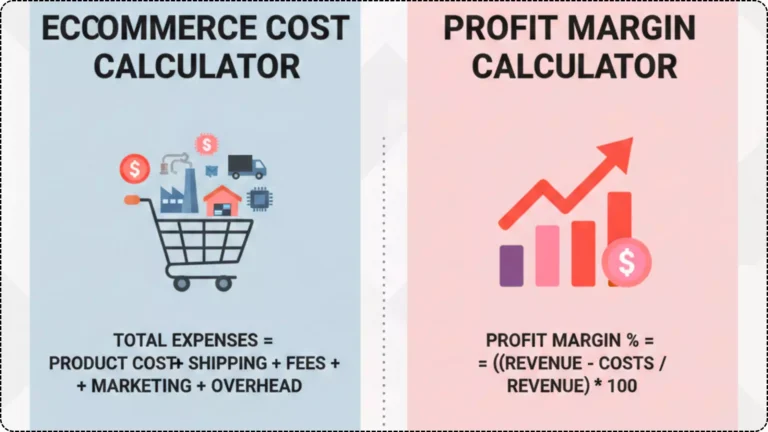
Profit Margin Formula:
Profit Margin (%) = (Net Profit ÷ Selling Price) × 100
In dropshipping, this calculation is more complex than most people expect. Product cost alone is not enough. Ads, payment fees, apps, and refunds can quickly eat into your margin.
That’s why a basic formula isn’t enough. You need a calculator that reflects how dropshipping actually works.
Costs You Must Include in a Dropshipping Profit Margin Calculator
Most sellers miscalculate profits because they ignore key expenses. If any of these are missing, your numbers are wrong.
Product Cost
- Supplier price
- Variant or customization fees
Shipping Cost
- Supplier shipping fees
- Premium or fast shipping options
- Return shipping costs
Advertising Spend
- Facebook ads
- TikTok ads
- Google ads
- Influencer payments
For most stores, advertising is the biggest expense.
Payment Processing Fees
- Shopify Payments
- PayPal
- Stripe
Typically 2–3% per transaction.
Platform and App Costs
- Shopify subscription
- Dropshipping apps
- Upsell, review, or tracking tools
Refunds and Chargebacks
- Failed deliveries
- Customer disputes
- Fraud losses
A proper dropshipping profit margin calculator accounts for all of these—either exactly or as realistic averages.
How to Calculate Dropshipping Profit Margin (Step by Step)
Here’s a realistic example.
Selling price: $60
Product cost: $18
Shipping: $7
Ad cost per sale: $20
Payment fees: $2
Apps and platform cost: $3
Step 1: Total Cost
18 + 7 + 20 + 2 + 3 = $50
Step 2: Net Profit
60 − 50 = $10
Step 3: Profit Margin
(10 ÷ 60) × 100 = 16.6%
That’s technically profitable, but it’s fragile. A small increase in ad costs or refunds can turn it negative fast.
This is exactly why calculators matter.
Why You Should Use a Dropshipping Profit Margin Calculator
Manual calculations work for one product. They don’t work when you’re testing multiple offers or running ads at scale.
A calculator helps you:
- See real profitability before launching ads
- Compare products objectively
- Adjust pricing with confidence
- Identify losing campaigns early
- Scale without guessing
If you’re serious about dropshipping, this isn’t optional.
What Is a Good Profit Margin for Dropshipping?
There’s no single “perfect” number, but experienced sellers generally aim for:
- 15–20%: Risky, very sensitive to ad costs
- 25–35%: Healthy and scalable
- 40%+: Strong and flexible
If your margins are below 20%, scaling becomes dangerous. One bad week can wipe out your profits.
Profit Margin vs Markup in Dropshipping
This is a common mistake.
- Markup: How much you increase the product price
- Profit Margin: How much you keep after costs
Example:
Product cost = $20
Selling price = $40
Markup = 100%
Profit margin = 50%
Always optimize for profit margin, not markup.
Using a Profit Margin Calculator Before Scaling
Before increasing ad budgets or adding new products, test scenarios:
- What if ad costs increase by 20%?
- What if refunds hit 8–10%?
- Is there room for discounts or bundles?
A good dropshipping profit margin calculator lets you model these situations before you spend money.
That’s how profitable stores grow without bleeding cash.
What to Look for in a Free Dropshipping Profit Margin Calculator
At minimum, it should include:
- Selling price
- Product cost
- Shipping cost
- Ad spend per conversion
- Payment processing fees
- App and platform costs
Advanced calculators also show:
- Net profit per order
- Profit margin percentage
- ROI and break-even metrics
The more realistic the inputs, the better the decisions.
Final Thoughts
High revenue means nothing if margins are weak.
A dropshipping profit margin calculator gives you clarity. It replaces assumptions with numbers and helps you make smarter decisions—before you scale, not after you lose money.
If you want to build a sustainable dropshipping business, start here. Know your margins. Everything else depends on it.
Frequently Asked Questions
What is a good profit margin for dropshipping?
Most successful stores aim for 25–35% to handle ad fluctuations and refunds.
Should ad spend be included in profit margin calculations?
Yes. Excluding ad costs gives a false sense of profitability.
Can I run a dropshipping store with low margins?
You can, but it’s risky and hard to scale long-term.
Are free dropshipping profit margin calculators reliable?
They are, as long as all real costs are included.