
Introduction
In the competitive world of e-commerce, understanding the difference between costs and profitability is essential. Many online store owners and digital marketers rely on calculators to make informed business decisions. Among these tools, Ecommerce Cost Calculators and Profit Margin Calculators are commonly used—but they serve distinct purposes.
This article will break down the differences, benefits, and practical applications of both, while providing expert insights for e-commerce businesses.
What is an Ecommerce Cost Calculator?
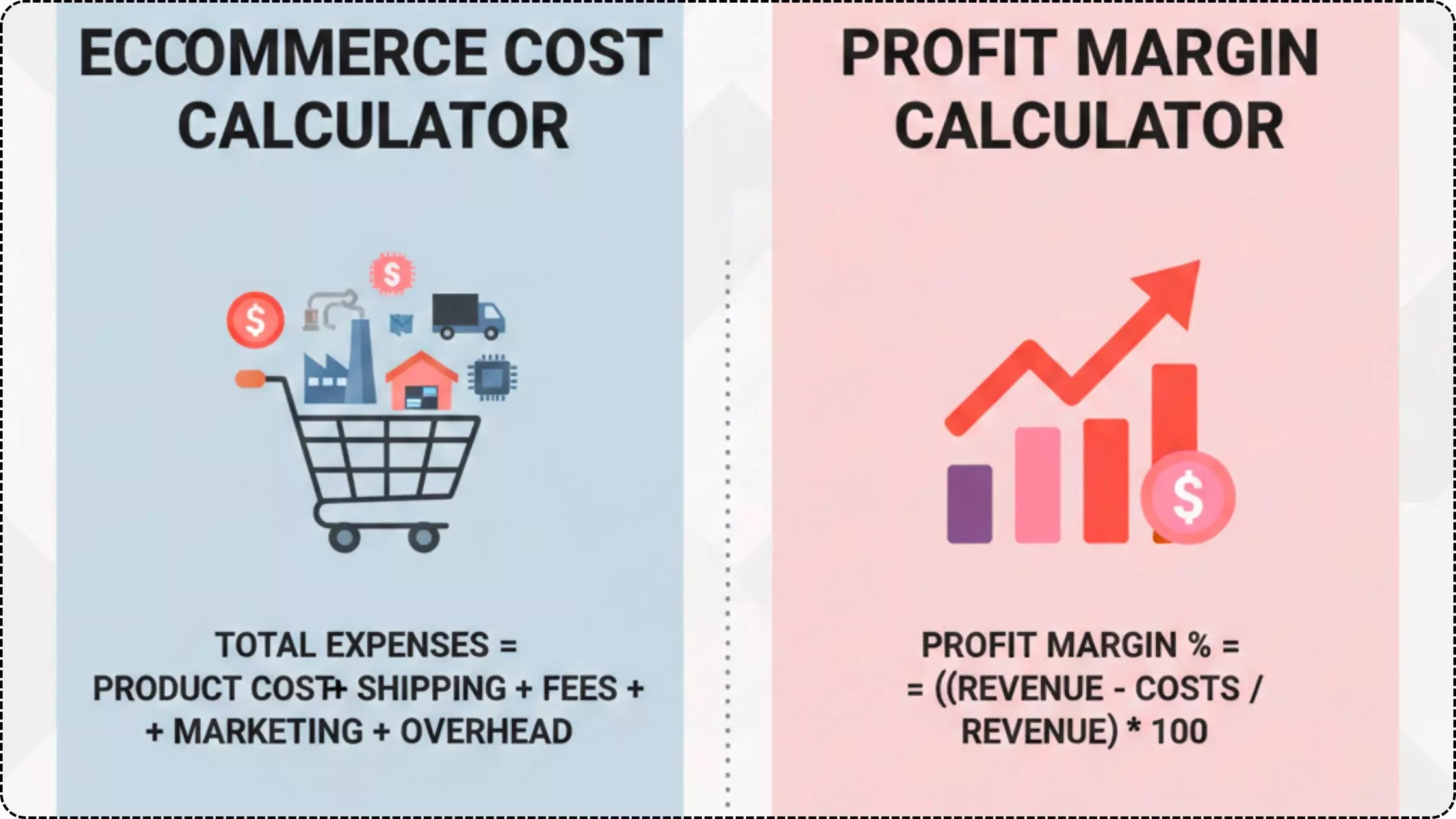
An Ecommerce Cost Calculator is a financial tool that helps store owners calculate the total costs involved in bringing a product to market. These calculators consider multiple variables to give an accurate picture of business expenditures.
Key Components:
- Manufacturing Costs: Raw materials, labor, production overhead.
- Shipping and Logistics Costs: Freight, customs duties, packaging.
- Marketing Expenses: Ads, promotions, email campaigns, social media.
- Operational Costs: Website hosting, software subscriptions, utilities, salaries.
Example Entity: Shopify, WooCommerce, Amazon FBA, Squarespace Commerce.
Benefits:
- Helps businesses understand break-even points.
- Enables better pricing strategies.
- Reduces the risk of hidden expenses affecting profit margins.
What is a Profit Margin Calculator?
A Profit Margin Calculator is a tool that evaluates how much profit you earn from each sale. It typically calculates profit as a percentage of revenue using the formula:
Profit Margin (%) = (Revenue − Total Costs) ÷ Revenue × 100
Key Components:
- Revenue (Selling Price): Income from sales.
- Total Costs: Can include manufacturing, shipping, and overhead.
- Profit Margin Types:
- Gross Profit Margin: Revenue minus cost of goods sold (COGS).
- Net Profit Margin: Revenue minus all business expenses, including overhead and taxes.
Example Entity: QuickBooks, Xero, ProfitWell.
Benefits:
- Helps determine pricing efficiency.
- Assists in financial forecasting and investor reporting.
- Guides decisions for scaling and reinvestment.
Ecommerce Cost Calculator vs Profit Margin Calculator: Key Differences
| Feature | Ecommerce Cost Calculator | Profit Margin Calculator |
|---|---|---|
| Primary Function | Calculates total costs of products and operations | Calculates profit as a percentage of revenue |
| Focus | Expense management | Profitability and pricing |
| Use Case | Budgeting, cost optimization | Pricing strategy, investor insights |
| Metrics Included | Manufacturing, logistics, marketing, operations | Revenue, COGS, gross/net profit |
| Ideal Users | E-commerce owners, operations managers | Accountants, CFOs, marketers |
Why Both Calculators Are Essential for E-Commerce Businesses
- Accurate Pricing Strategy: Understanding both costs and profit ensures your pricing maximizes revenue without sacrificing competitiveness.
- Financial Forecasting: Cost calculators help project expenditures, while profit calculators forecast net earnings.
- Investment Decisions: Investors value businesses with clear insight into both cost structures and profit margins.
- Operational Efficiency: Cost analysis reveals areas to reduce expenses, increasing profit potential.
FAQs
Can an Ecommerce Cost Calculator predict profit?
Not directly. It calculates expenses, but you need a profit margin calculator to assess profitability.
Are these calculators industry-specific?
No. While examples like Shopify or Amazon FBA are common, these tools are adaptable for any e-commerce model.
Which calculator should I use first?
Start with a cost calculator to understand expenses, then use a profit margin calculator to set optimal pricing.
Can these calculators be integrated?
Yes. Many platforms, including QuickBooks and Shopify, offer integrations to calculate costs and profit simultaneously.
Is there a free version available?
Several free online calculators exist, but premium tools provide advanced features like multi-product analysis and real-time analytics.
Conclusion
Understanding the distinction between an Ecommerce Cost Calculator and a Profit Margin Calculator is critical for any e-commerce business. While the cost calculator helps you track and manage expenses, the profit margin calculator evaluates profitability and informs pricing strategies. Using both tools in tandem gives you a 360-degree view of your business finances, empowering better decision-making and long-term growth.