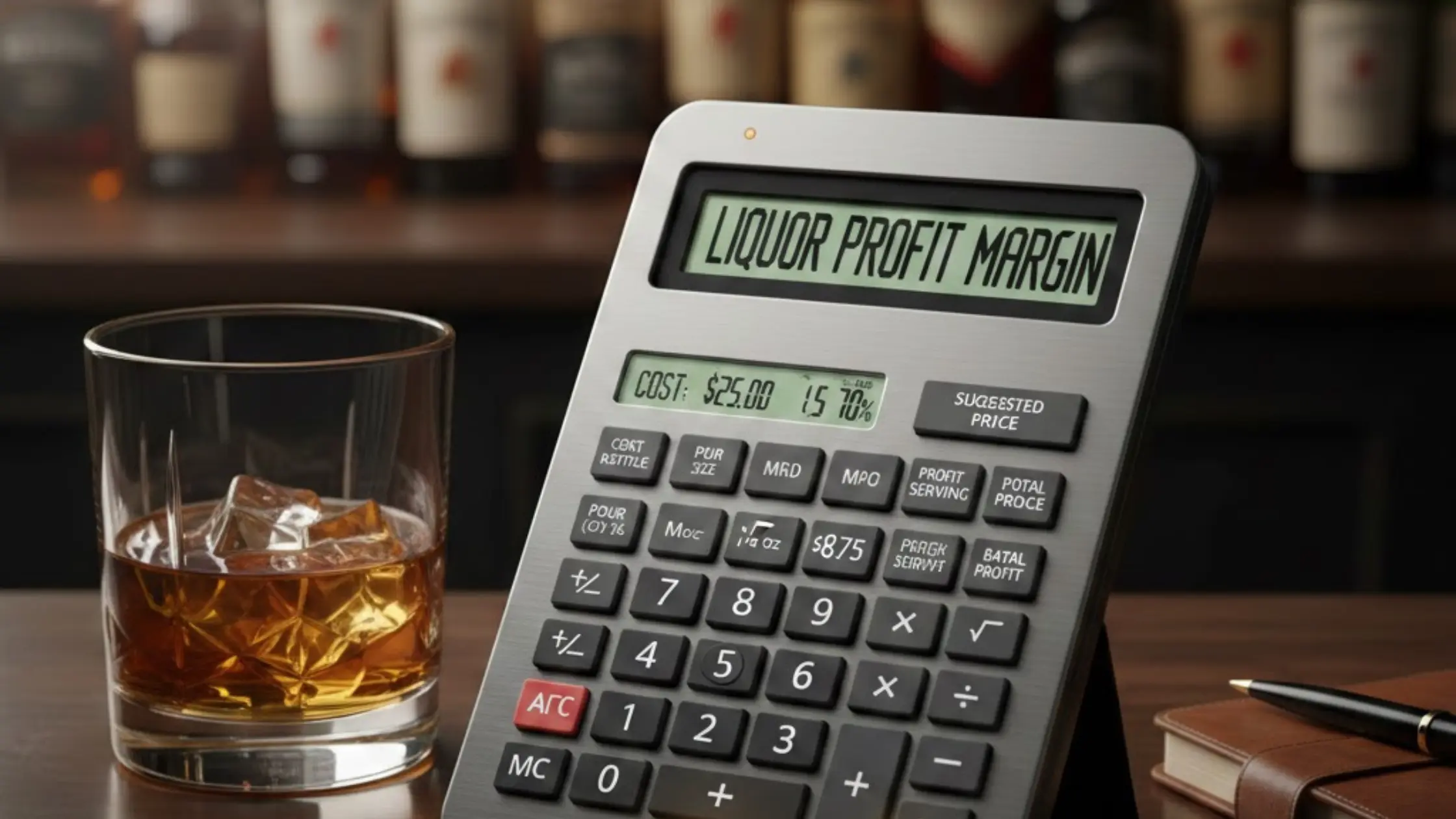

Your complete guide to liquor margins, industry benchmarks, pricing formulas, and a step-by-step profit calculator.
Liquor is one of the highest-margin products in the food and beverage world. But here’s the thing: most businesses still lose money because they’re guessing instead of calculating.
If you run a bar, a restaurant, a liquor store, or an online alcohol brand, your margins determine everything pricing, cash flow, inventory decisions, monthly profitability. This guide breaks down exactly how liquor profit margins work and shows you how to calculate them with a reliable, structured process.
Let’s break it down.
What Is a Liquor Profit Margin?
A liquor profit margin measures how much money you keep after covering the cost of the product (COGS), taxes, and related expenses. In simple terms:
Profit Margin (%) = (Selling Price – Cost) ÷ Selling Price × 100
This lets you understand:
- How profitable each bottle or drink is
- Whether your pricing aligns with industry benchmarks
- How rising supplier costs affect your bottom line
- How many units you need to sell to hit monthly revenue targets
Why Liquor Margins Matter More Than Most People Realise
Liquor margins aren’t just “nice to know.” They shape your entire business model.
Here’s what this really means:
- Bars depend on liquor for 70–85% of total profit. A few mispriced SKUs can destroy monthly margins.
- Liquor stores run on volume. Even small improvements in per-bottle margin have big impact at scale.
- Restaurants rely on alcohol to offset low food margins. Liquor is often the difference between profit and loss.
- Online alcohol sellers face higher costs (shipping, payment fees). Margin intelligence becomes critical.
Get your liquor margins right, and everything else becomes easier: pricing, forecasting, and inventory planning.
The Liquor Profit Margin Calculator
Below is a structured, repeatable framework you can apply to any alcohol product — spirits, beer, wine, RTDs, or cocktails.
Enter Your Product Cost
- Bottle cost (or cost per case)
- Taxes / excise per bottle
- Shipping or freight cost
- Payment fees (for online sellers)
- Shrinkage allowance (optional)
Formula:
Total Cost = Purchase Cost + Extra Costs
Enter Your Selling Price
If you’re a bar: menu price per pour or per cocktail
If you’re a store: shelf price per bottle
If you’re online: final checkout price
Calculate Your Profit per Unit
Profit per Unit = Selling Price – Total Cost
Calculate Your Profit Margin (%)
Profit Margin (%) = Profit ÷ Selling Price × 100
Evaluate Against Industry Benchmarks
Use this reference table:
Bar / Restaurant Liquor Margins (On-Premise)
- Spirits: 70–85% margin
- Cocktails: 60–80% margin (depends on complexity)
- Wine by the glass: 65–75%
- Beer: 50–70%
Liquor Store Margins (Off-Premise)
- Spirits: 25–35%
- Wine: 30–50%
- Craft beer: 20–30%
- Premium / limited bottles: sometimes < 20%
Online Alcohol Seller Margins
- Ranges vary widely: 20–40%
- Higher shipping and payment fees reduce margins fast.
Improve Your Margins
You can apply these actions to any product type:
If your margin is too low:
- Increase price slightly
- Reduce pour size (bars)
- Negotiate supplier discounts
- Switch to better-margin SKUs
- Reduce slow-moving inventory
If your cost is rising:
- Adjust prices quarterly
- Move to more stable suppliers
- Bulk-purchase SKUs with predictable turnover
If sales volume is high but profit is low:
- Introduce “premium tiers” (well / call / top-shelf)
- Bundle products at higher margin
- Add upsell items (mixers, garnishes, tasting notes)
Liquor Profit Margin Examples
These examples help your page capture long-tail keywords and strengthen topical authority.
Bar – Vodka Pour Margin
- Bottle cost: $20
- Bottle size: 750ml
- Pour size: 1.5 oz (44ml)
- Selling price: $9
Cost per pour:
Cost per ml = 20 ÷ 750 = $0.026
Cost per pour = 44 × 0.026 = $1.14
Profit per pour:
$9 – $1.14 = $7.86
Profit margin:
7.86 ÷ 9 = 87% margin
Liquor Store – Whiskey Bottle
- Wholesale cost: $32
- Selling price: $45
Profit = 45 – 32 = $13
Profit margin = 13 ÷ 45 = 28.8%
This fits the standard liquor store margin range (25–35%).
Online Alcohol Retailer – Premium Tequila
- Cost: $58
- Shipping: $6
- Payment fees: $2.90
- Final cost: $66.90
- Selling price: $89
Profit = 89 – 66.90 = $22.10
Margin = 22.1 ÷ 89 = 24.8%
Online margins tighten fast because of logistics costs.
Common Mistakes When Calculating Liquor Profit Margins
Most businesses get margins wrong because they overlook things like:
- Shrinkage (spillage, breakage, over-pouring)
- Comp drinks (bars)
- Case discounts not applied correctly
- Price changes not updated monthly
- Shipping costs (online retail)
- Seasonal demand swings
Small errors here stack up and distort profitability.
FAQ
These help capture long-tail search traffic and also qualify for FAQ schema.
What is a good liquor profit margin?
Bars aim for 70–85%. Liquor stores aim for 25–35%.
How do I calculate cost per pour?
Divide bottle cost by total ml, then multiply by ml per pour.
Why are bar margins higher than liquor store margins?
Bars sell “experiences,” not just alcohol. Retail stores compete on price.
Should I include taxes and shipping in my margin calculation?
Yes. Ignoring these leads to artificially inflated margin numbers.
How often should I adjust liquor prices?
Every 30–90 days, depending on supplier volatility.
Final Thoughts
Liquor profitability looks simple on the surface, but real success comes from precise calculation and constant calibration. A liquor profit margin calculator gives you instant clarity — whether you’re pricing cocktails, bottles, or online orders.
If you build your pricing around real numbers instead of gut feeling, you move from guessing to controlling your margins, revenue, and long-term growth.