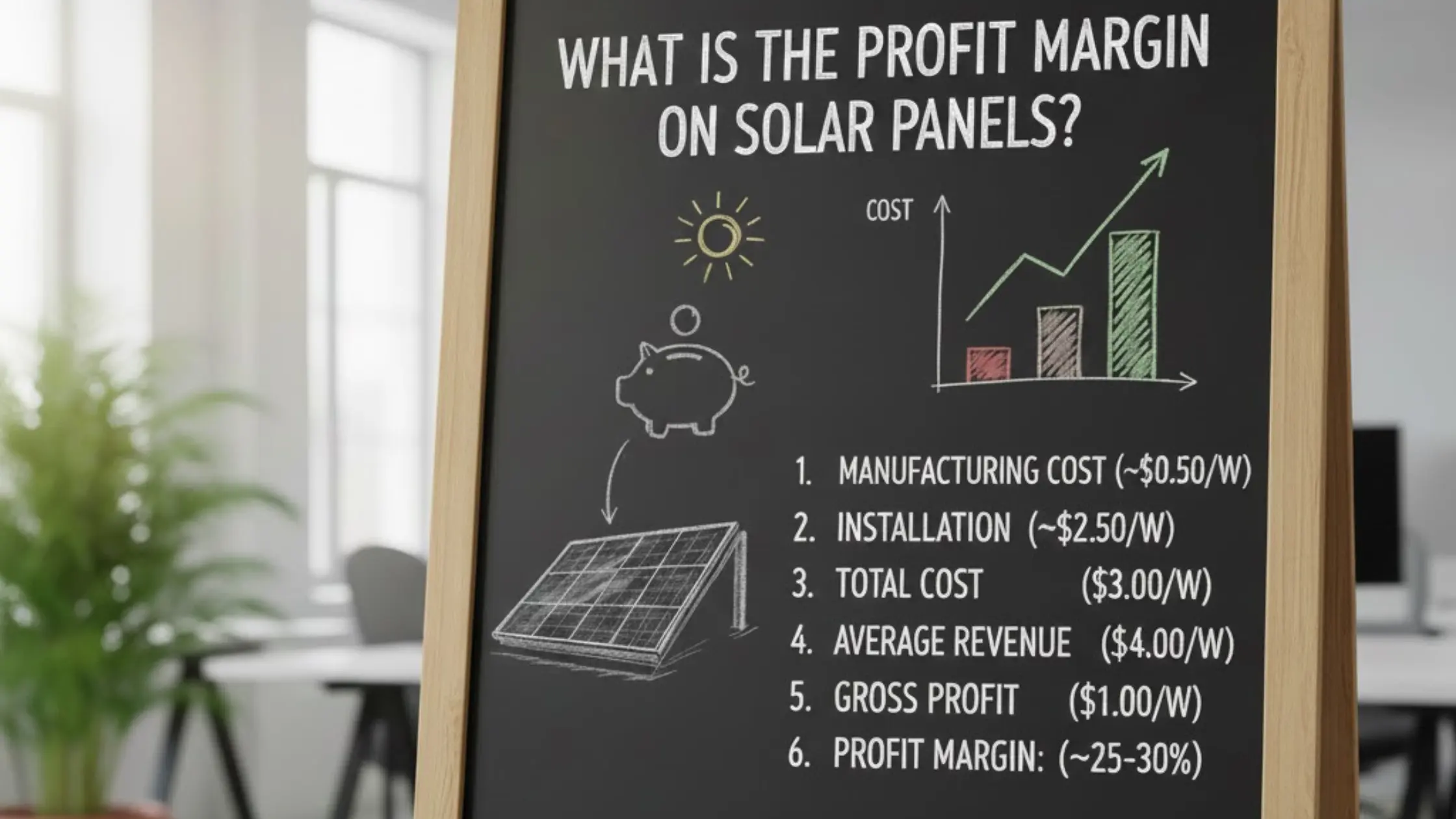

Solar energy is booming but profitability in the solar industry is often misunderstood. Many assume selling solar panels is highly lucrative. The reality is more nuanced.
Profit margins vary significantly depending on where you operate in the solar value chain: manufacturing, distribution, installation, or project ownership. Understanding these margins is critical for anyone looking to enter the solar business.
Let’s break it down clearly.
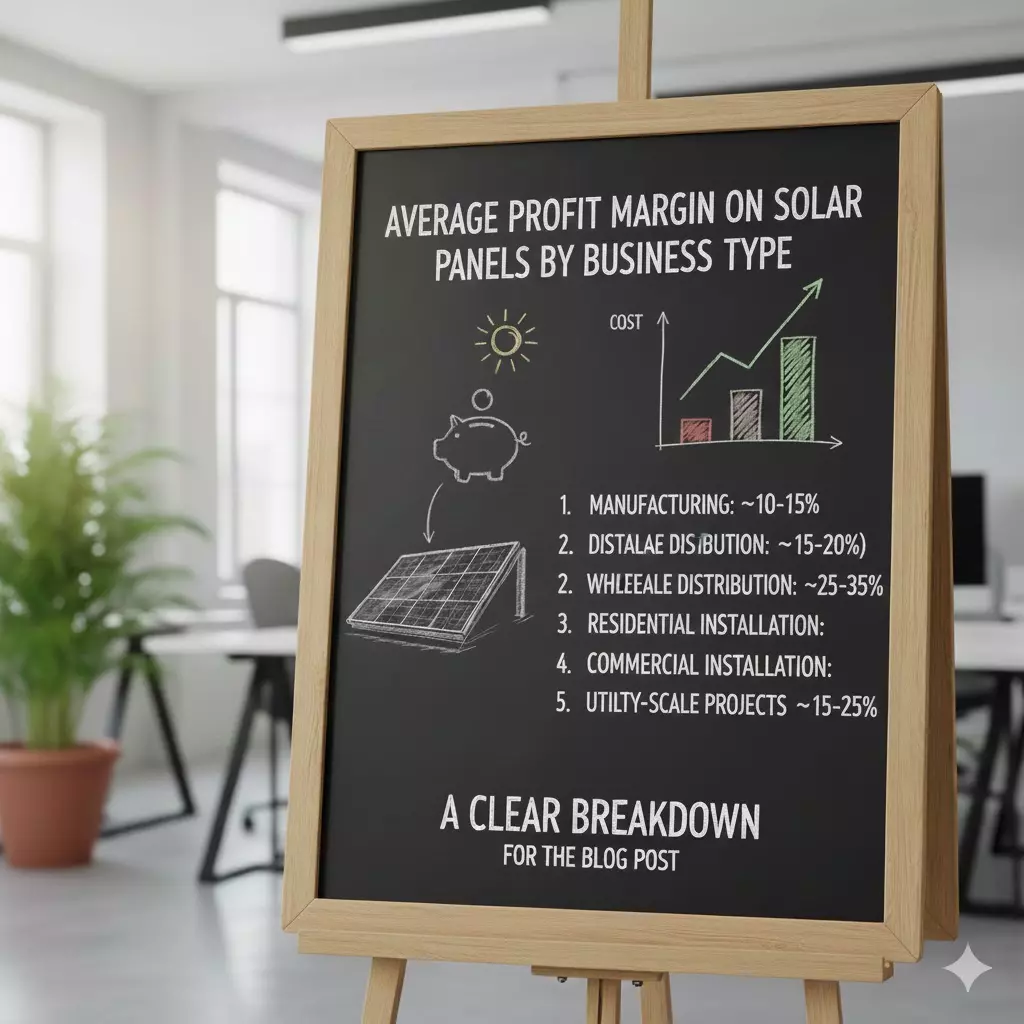
Average Profit Margin on Solar Panels by Business Type
1. Solar Panel Manufacturers
Gross margin: 10%–20%
Net margin: 3%–8%
Manufacturing solar panels is capital-intensive and highly competitive. Large-scale producers, especially in Asia, drive prices down. Margins improve only with massive volume, automation, and vertical integration.
Key challenge: Tight pricing and high upfront capital costs.
Opportunities: Developing proprietary technology, high-efficiency panels, or targeting niche markets (e.g., off-grid or industrial solutions) can improve margins.
2. Solar Panel Distributors & Wholesalers
Gross margin: 8%–15%
Net margin: 2%–6%
Distributors operate on thin margins but benefit from consistent demand. Profitability depends on:
- Efficient logistics
- Strong supplier agreements
- Smart inventory management
Key challenge: Low margins require high sales volume and tight cost control.
Opportunity: Focus on value-added services like custom kits, installation training, or regional support.
3. Solar Installers (Residential & Commercial)
Gross margin: 20%–40%
Net margin: 10%–25%
This is where the solar industry gets truly profitable. Installers sell complete systems—not just panels. Revenue comes from:
- Installation labor and system design
- Equipment markups (panels, inverters, batteries)
- Financing, monitoring, and maintenance contracts
Residential solar installations often outperform commercial projects in margin due to customization and financing add-ons.
Opportunity: Upsell warranties, maintenance, and energy management solutions to boost recurring revenue.
4. Utility-Scale Solar Projects
Project margin: 5%–12%
Utility-scale projects rely on long-term contracts and predictable revenue streams through Power Purchase Agreements (PPAs). Upfront margins are lower, but returns are stable over decades.
Opportunity: Focus on long-term energy contracts, government incentives, and large-scale EPC (engineering, procurement, construction) efficiencies.
Factors Affecting Solar Panel Profit Margins
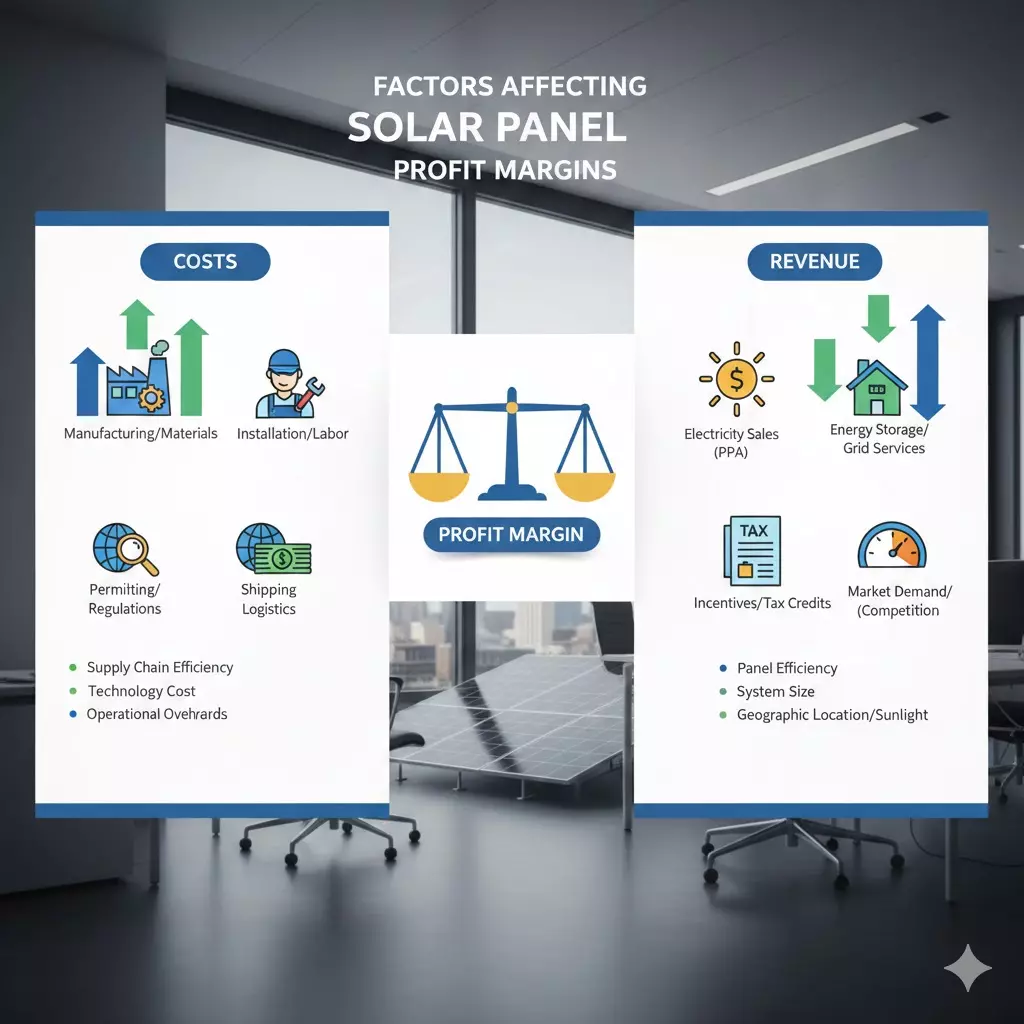
Profitability in solar isn’t just about panel costs—it’s influenced by multiple factors:
- Customer acquisition costs – High marketing spend lowers margins for residential installers.
- Government incentives & tax credits – These can significantly boost ROI and reduce upfront costs.
- Labor & installation efficiency – Reducing installation time directly improves margins.
- Financing options – Offering loans or leases can create recurring revenue and increase system affordability.
- Local competition – Areas with high competition may force price reductions, squeezing margins.
The most profitable solar companies optimize operations, marketing, and financing simultaneously.
Is Selling Solar Panels a High-Margin Business?
- Selling panels alone: Low-margin business. Manufacturers and distributors typically operate on thin margins.
- Installing complete systems: Solid, scalable margins. Installers who provide end-to-end solutions see the best returns.
- Owning solar assets: Long-term, stable returns. Selling energy or leasing solar systems can generate steady, recurring income.
The key takeaway: value-added services and installation expertise drive profitability far more than simply selling hardware.
How to Maximize Solar Panel Profit Margins
- Focus on installation and service – End-to-end solutions earn higher margins.
- Offer financing & maintenance contracts – Creates recurring revenue.
- Optimize marketing and lead generation – Reduces customer acquisition cost.
- Leverage incentives and rebates – Improves affordability and upsell opportunities.
- Target niche markets – Off-grid systems, commercial rooftops, or industrial solutions often carry better margins.
FAQs About Solar Panel Profit Margins
What is the average profit margin for solar panel installers?
Residential and commercial solar installers typically see gross margins of 20–40% and net margins of 10–25%, depending on system size and efficiency of operations.
Do solar panel manufacturers make a lot of money?
Not usually. Manufacturers face tight margins (3–8% net) due to high competition and capital-intensive operations. Profitability improves with scale, technology, and niche products.
Are solar panels a good business to get into?
Yes, especially if you focus on installations, maintenance, and financing, rather than just selling panels. End-to-end services generate the most revenue.
How do government incentives affect margins?
Incentives, rebates, and tax credits reduce system costs for customers and improve profitability for installers. They can be the difference between a break-even project and a high-margin installation.
Can small solar businesses compete with large companies?
Absolutely. Small businesses can compete by targeting local markets, providing superior service, and offering tailored financing or maintenance packages.
Are residential solar installations more profitable than commercial?
Residential systems often have higher per-unit margins due to financing opportunities and customization, while commercial systems rely on scale and efficiency.
Final Takeaway
Solar is not a get-rich-quick industry—but it is a profitable one if positioned correctly. The most successful companies focus on end-to-end solutions, operational efficiency, and value-added services. Selling panels alone rarely provides sustainable profit.