
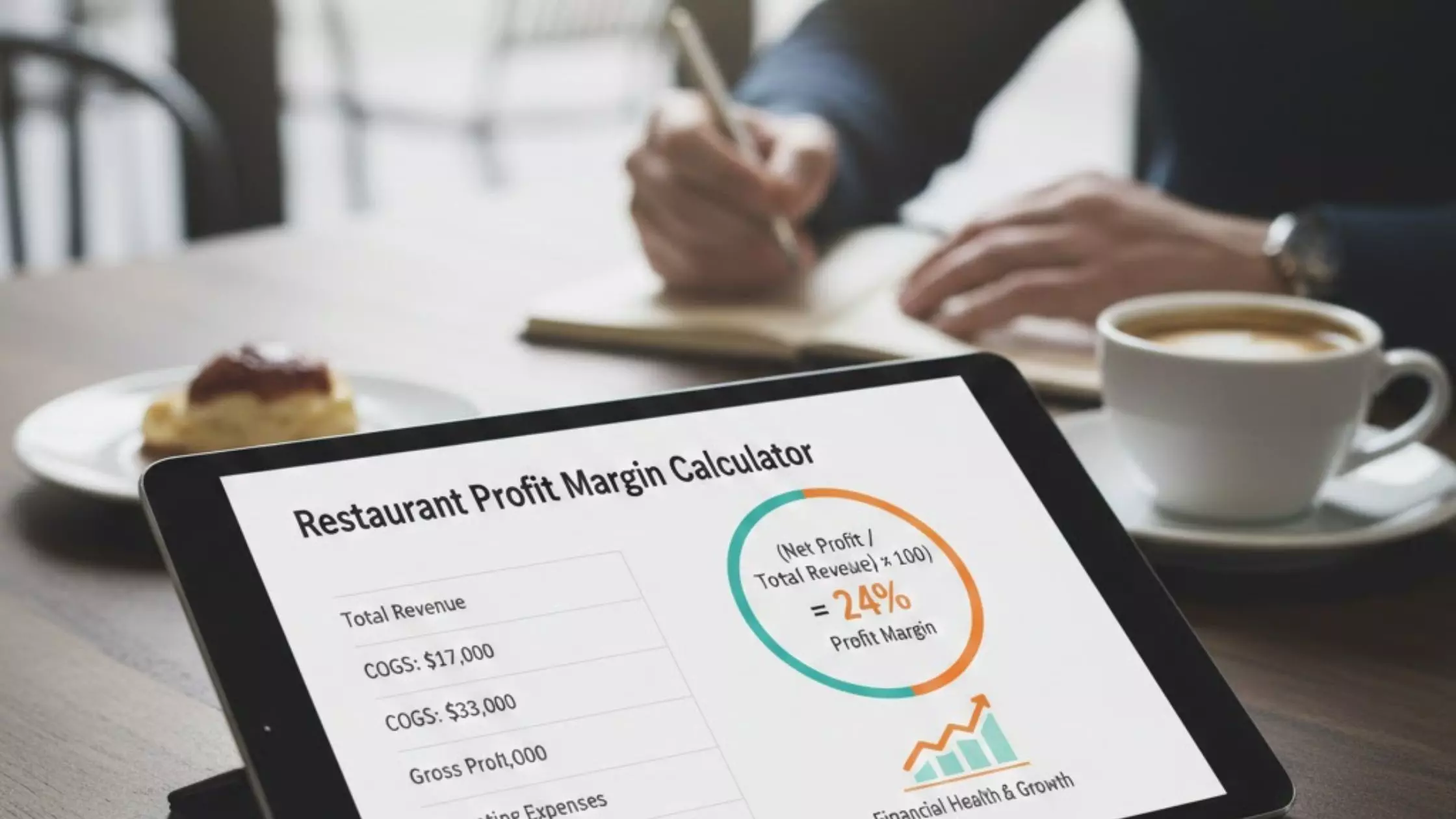

Running a restaurant is a balancing act tight margins, rising costs, and shifting customer demand. A profit margin calculator gives you clarity fast. Instead of guessing where the money goes, you get hard numbers you can act on. Let’s break it down.
What a Restaurant Profit Margin Calculator Actually Does
A profit margin calculator shows you how much profit you make on each dollar of revenue. You enter your total sales, cost of goods sold, operating expenses, and the tool gives you: • Gross Profit • Net Profit • Gross Profit Margin (%) • Net Profit Margin (%) This is how restaurant owners spot leaks, adjust pricing, and decide whether a menu item is worth keeping.The Formula Behind the Calculator
Here’s the simple math running in the background: Gross Profit = Revenue – Cost of Goods Sold (COGS) Gross Profit Margin = (Gross Profit / Revenue) × 100 Net Profit = Revenue – (COGS + Operating Expenses + Misc. Costs) Net Profit Margin = (Net Profit / Revenue) × 100 Nothing complicated. What matters is accurate input.Why Restaurant Profit Margins Matter
Profit margins tell you: • Whether your pricing is too low • If food cost is eating your revenue • If labor and overheads are too high • Which dishes are profitable vs. dead weight • When to raise prices or cut expenses • How your restaurant stacks up against industry benchmarks Most restaurants operate on margins between 3% and 10%—so even small cost changes matter.How to Use a Profit Margin Calculator Step-by-Step
Step 1: Enter Total Revenue Monthly or annual sales. Step 2: Add Your COGS Ingredients, packaging, kitchen supplies, etc. Step 3: Enter Operating Expenses Rent, salaries, utilities, marketing, POS systems, etc. Step 4: Add Misc. Costs Repairs, delivery commissions, taxes, equipment leases. Step 5: Review the Results The calculator displays your gross and net margins—and where your money goes.Where Most Restaurant Owners Make Mistakes
- Ignoring delivery platform fees Uber Eats and Foodpanda can destroy margins if not factored in.
- Not updating food cost regularly Ingredient prices fluctuate weekly.
- Pricing based on competition, not numbers You need your own cost benchmark—not someone else’s menu.
- Under-counting labor costs Prep time, cleaning, dishwashing—everything counts.
- No tracking of waste and spoilage Wasted food = destroyed margins.