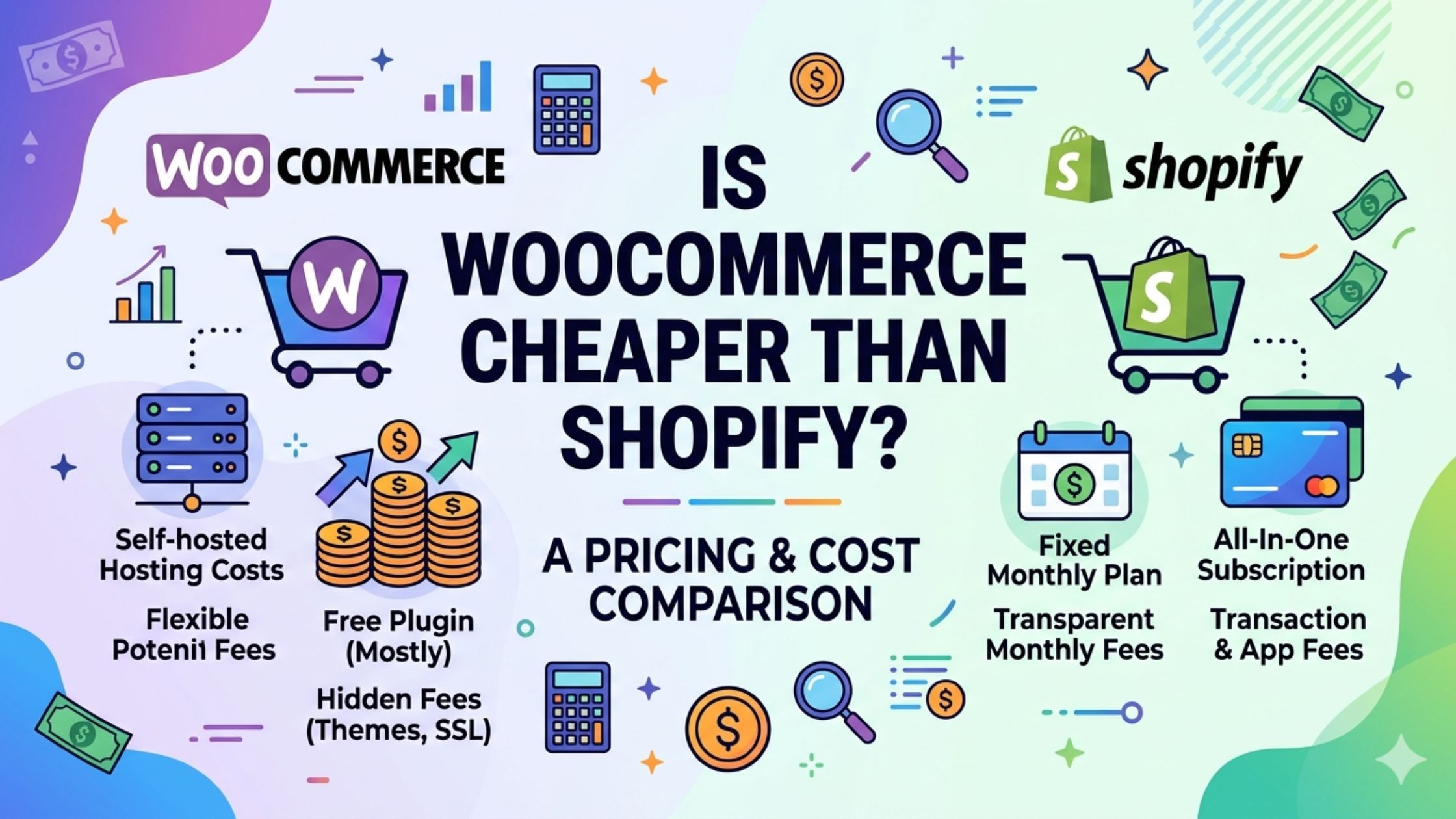

Launching an online store is exciting until you start calculating costs. Many entrepreneurs assume WooCommerce is completely free while Shopify is expensive because of its monthly subscription. The reality is more complex. Hosting fees, transaction costs, premium apps, themes, and maintenance can significantly impact your ecommerce budget. This guide breaks down every major expense so you can determine whether WooCommerce is cheaper than Shopify and which platform offers the best value for your business in 2026.
Quick Answer: Is WooCommerce Cheaper Than Shopify?
In most cases, WooCommerce can be cheaper than Shopify, especially for businesses that already have a WordPress website or want full control over expenses.
However, WooCommerce is not entirely free. While the core plugin costs nothing, you must pay for hosting, domain registration, security, backups, and any premium plugins you choose to use.
Shopify charges a monthly subscription fee, but hosting, security, updates, and maintenance are included.
Quick Comparison
| Cost Factor | WooCommerce | Shopify |
|---|---|---|
| Software Cost | Free | Monthly Subscription |
| Hosting | Required | Included |
| SSL Certificate | Usually Included with Hosting | Included |
| Security | Self Managed | Included |
| Maintenance | Self Managed | Included |
| Themes | Optional | Optional |
| Plugins & Apps | Optional | Often Required |
| Transaction Fees | Flexible | Depends on Plan |
For store owners comfortable managing WordPress, WooCommerce often delivers lower long-term costs. For those wanting simplicity, Shopify offers predictable pricing and less technical work.
Understanding WooCommerce Pricing
Is WooCommerce Really Free?
WooCommerce is an open-source ecommerce plugin built for WordPress. You can download and install it without paying licensing fees.
That said, “free” only refers to the software itself.
To operate a professional online store, you’ll need additional services and tools.
Required WooCommerce Expenses
Domain Registration
Your domain name typically costs between $10 and $20 per year.
Web Hosting
WooCommerce requires WordPress hosting.
Basic hosting plans may cost $5 to $15 monthly, while managed WooCommerce hosting can range from $20 to $100+ monthly.
SSL Certificate
Most hosting providers include SSL certificates, though premium options may carry additional costs.
Premium Themes
Free themes are available, but premium ecommerce themes often range from $50 to $150.
WooCommerce Extensions
Many store owners purchase premium extensions for:
- Subscription products
- Membership sites
- Shipping automation
- Advanced SEO
- Inventory management
Typical WooCommerce Startup Costs
| Expense | Estimated Cost |
|---|---|
| Domain | $10-$20/year |
| Hosting | $60-$300/year |
| Theme | $0-$150 |
| Plugins | $0-$500+ |
| SSL | Usually Included |
| Total First Year | $70-$970+ |
The final cost depends entirely on your business needs.
Understanding Shopify Pricing
Shopify follows a subscription-based pricing model.
Instead of purchasing hosting and maintenance separately, everything is bundled into a monthly plan.
Shopify Plans Explained
Shopify typically offers multiple pricing tiers:
- Basic Shopify
- Shopify
- Advanced Shopify
Each plan includes ecommerce hosting, security, checkout functionality, and customer support.
What Is Included in Shopify Pricing?
When you pay Shopify’s monthly fee, you receive:
- Hosting
- SSL certificate
- Security monitoring
- Automatic updates
- Built-in checkout
- Website builder
- Customer support
This all-in-one approach simplifies store management.
Shopify Cost Breakdown
| Expense | Estimated Cost |
|---|---|
| Subscription Plan | Monthly Fee |
| Domain | Optional |
| Premium Theme | Optional |
| Apps | Optional |
| Hosting | Included |
| Security | Included |
For beginners, this predictable structure can make budgeting easier.
WooCommerce vs Shopify Cost Breakdown
A proper ecommerce platform comparison requires evaluating total ownership costs rather than just monthly fees.
Hosting Costs
WooCommerce requires separate hosting.
Shopify includes hosting with every plan.
For small stores, hosting expenses may be relatively low. As traffic grows, hosting upgrades become necessary.
Theme Costs
Both platforms offer free themes.
Premium themes are available for users seeking advanced functionality and customization.
Plugin and App Expenses
WooCommerce relies on plugins.
Shopify relies on apps.
Costs can vary dramatically depending on the features you need.
Maintenance Costs
WooCommerce users handle:
- Updates
- Backups
- Security monitoring
- Performance optimization
Shopify manages these tasks automatically.
Developer Costs
WooCommerce offers extensive customization but may require occasional developer support.
Shopify typically requires less technical assistance.
Cost Comparison Table
| Expense | WooCommerce | Shopify |
|---|---|---|
| Hosting | Separate Cost | Included |
| Security | Self Managed | Included |
| Updates | Self Managed | Included |
| Themes | Optional | Optional |
| Extensions | Optional | Optional |
| Maintenance | User Responsibility | Shopify Responsibility |
| Developer Support | More Common | Less Common |
For technically experienced users, WooCommerce often remains more affordable over time.
Hidden Costs of WooCommerce vs Shopify
Many ecommerce platform comparisons overlook hidden expenses.
Hidden WooCommerce Costs
Store owners may eventually purchase:
- Backup software
- Security plugins
- Premium SEO tools
- Marketing integrations
- Performance optimization services
These costs can add up quickly.
Hidden Shopify Costs
Shopify also has hidden expenses.
Common examples include:
- Premium themes
- Third-party apps
- Additional staff accounts
- Advanced reporting features
- Transaction fees on certain payment gateways
The platform may appear straightforward initially, but app subscriptions can increase monthly costs substantially.
Shopify vs WooCommerce Transaction Fees
Transaction fees play a major role in ecommerce profitability.
WooCommerce Transaction Fees
WooCommerce itself does not charge transaction fees.
Instead, payment processors such as Stripe or PayPal charge processing fees.
This provides greater flexibility.
Shopify Transaction Fees
Shopify charges payment processing fees through Shopify Payments.
Additional transaction fees may apply when using external payment gateways.
Payment Fee Comparison
| Factor | WooCommerce | Shopify |
|---|---|---|
| Platform Transaction Fee | None | May Apply |
| Payment Gateway Options | Extensive | Extensive |
| Flexibility | High | Moderate |
Businesses processing large sales volumes should carefully evaluate payment costs before choosing a platform.
Which Platform Is More Profitable?
Profitability depends on much more than startup costs.
You should consider:
- Operating expenses
- Growth plans
- Marketing costs
- Payment fees
- Maintenance requirements
Scenario 1: Startup Business
A startup with limited resources may find WooCommerce more cost-effective.
Lower recurring fees help preserve cash flow.
Scenario 2: Growing Brand
As sales increase, Shopify’s convenience can save significant management time.
Time savings often translate into higher productivity.
Scenario 3: Large Ecommerce Store
Large stores often evaluate total cost of ownership over several years.
WooCommerce’s flexibility can reduce expenses, while Shopify’s automation can improve efficiency.
The most profitable platform depends on your operational model.
WooCommerce vs Shopify for Small Businesses
Small business owners usually prioritize affordability and ease of use.
WooCommerce Advantages
- Lower long-term costs
- Unlimited customization
- Better ownership control
- No platform lock-in
Shopify Advantages
- Faster setup
- Minimal maintenance
- Excellent support
- User-friendly dashboard
Best Platform by Business Type
| Business Type | Recommended Platform |
|---|---|
| Startup | WooCommerce |
| Blogger Selling Products | WooCommerce |
| Beginner Entrepreneur | Shopify |
| Fast-Growth Brand | Shopify |
| Highly Customized Store | WooCommerce |
WooCommerce vs Shopify for Beginners
If you’re new to ecommerce, ease of use matters.
WooCommerce Learning Curve
WooCommerce requires:
- WordPress knowledge
- Hosting setup
- Plugin management
- Security maintenance
This creates a steeper learning curve.
Shopify Learning Curve
Shopify simplifies nearly everything.
You can:
- Launch faster
- Manage products easily
- Process payments quickly
- Focus on sales rather than technical tasks
For beginners, Shopify is usually easier.
For experienced WordPress users, WooCommerce may feel more natural.
Best Shopify Alternatives in 2026
Shopify remains one of the most popular ecommerce platforms, but several alternatives deserve consideration.
WooCommerce
Ideal for WordPress users seeking flexibility.
BigCommerce
Strong built-in functionality with fewer app requirements.
Magento
Suitable for large enterprises with development resources.
OpenCart
Open-source platform with low operating costs.
Wix Ecommerce
User-friendly solution for small businesses.
Each platform offers a different balance of cost, customization, and scalability.
WooCommerce vs Shopify: Three-Year Cost Example
Many business owners focus only on monthly fees.
A better approach is evaluating three-year ownership costs.
Example Store
Requirements:
- One premium theme
- Basic marketing tools
- Payment processing
- Moderate traffic
| Cost Category | WooCommerce (3 Years) | Shopify (3 Years) |
|---|---|---|
| Hosting | Variable | Included |
| Software | Free | Subscription Required |
| Security | Variable | Included |
| Maintenance | Variable | Included |
| Apps/Plugins | Variable | Variable |
| Total Cost | Often Lower | More Predictable |
WooCommerce frequently wins on cost.
Shopify often wins on convenience.
Final Verdict: Which Ecommerce Platform Should You Choose?
So, is WooCommerce cheaper than Shopify?
For many businesses, yes.
WooCommerce can deliver lower long-term costs because the software is free and transaction fees are generally more flexible.
However, those savings come with added responsibilities such as hosting management, security updates, and plugin maintenance.
Choose WooCommerce if:
- You use WordPress
- You want maximum customization
- You want lower long-term costs
- You have technical knowledge
Choose Shopify if:
- You want simplicity
- You want faster setup
- You prefer predictable monthly expenses
- You want less technical maintenance
The right platform depends on your budget, technical skills, and growth strategy.
Frequently Asked Questions
Is WooCommerce really free?
Yes. The WooCommerce plugin is free to download and use. However, you must pay for hosting, a domain name, and optional premium extensions.
Why is WooCommerce cheaper than Shopify?
WooCommerce has no monthly platform fee, allowing businesses to control expenses and choose affordable hosting providers.
What are the hidden costs of WooCommerce?
Hidden costs may include premium plugins, backups, security software, premium themes, and developer assistance.
Is Shopify worth the monthly subscription fee?
For many businesses, yes. Shopify includes hosting, security, maintenance, and support, reducing technical workload.
Does WooCommerce charge transaction fees?
No. WooCommerce does not charge transaction fees, although payment processors still charge processing fees.
How much does it cost to run a WooCommerce store?
Most small stores spend between $100 and $1,000+ annually depending on hosting, plugins, and customization requirements.
Which platform has lower operating costs?
WooCommerce often has lower operating costs for technically skilled users. Shopify provides predictable costs with fewer maintenance responsibilities.
Can I migrate from Shopify to WooCommerce?
Yes. Several migration tools and services allow store owners to transfer products, customers, and orders from Shopify to WooCommerce.
Which platform offers better SEO features?
Both platforms support SEO. WooCommerce provides greater flexibility through WordPress SEO plugins, while Shopify offers strong built-in optimization features.
What is the cheapest ecommerce platform?
WooCommerce is often considered one of the cheapest ecommerce platforms because the software itself is free and highly customizable.